Written by Thorin Anderson
Alexander Hamilton wrote in Federalist 78 that the U.S. Supreme Court would be the weakest branch of government because it had “no influence over either the sword or the purse.” Why then the panic and flaming hair on the Democrat side of the isle with the elevation of Amy Coney Barrett to that Court? What gives? She claims to be an originalist, and by definition an originalist ignores his or her own policy preferences and yields to the intention of the U.S.… Continue Reading
Written by Daniel Horowitz
Democrats never have any doubts about their court nominees. They know with certainty that once their picks are on the court, they will be willing to do anything in a real case to interpret the U.S. Constitution the way they see it. They will rule with the party’s preferred political outcomes regardless of past precedent or the plain meaning of the Constitution. There is no reason why conservatives cannot have that same confidence that GOP nominees will rule on the side of the original meaning of the U.S.… Continue Reading
Tags: 14th Amendment, Antonin Scalia, Arizona v. United States, Bill of RIghts, Bladensburg cross case, Bostock v. Clayton County, Civil Rights Act of 1964, Clarence Thomas, Due Process, Education Amendments Act of 1972, Eighth Amendment, Equal Protection, Establishment Clause, Griggs v. Duke Power Co., illegal aliens, John Marshall, Judicial Nominations, Neil Gorsuch, Obergefell, Patchak v. Zinke, Plyler v. Doe, Privileges and Immunities Clause, SCOTUS, Supremacy Clause, Title VII of the Civil Rights Act, U.S. Senate Judiciary Committee, U.S. Supreme Court, Voting Rights Act, Zadvydas v. Davis
 Federal Issues, Judicial Branch | David E. Smith |
  September 24, 2020 7:17 AM |
  Comments Off on 16 Questions Conservatives Should Ask Any SCOTUS Nominee
Written by John A. Sparks
Sometimes, the facts of a case have an emotional appeal in addition to a strong constitutional basis. Espinoza v. Montana certainly qualifies.
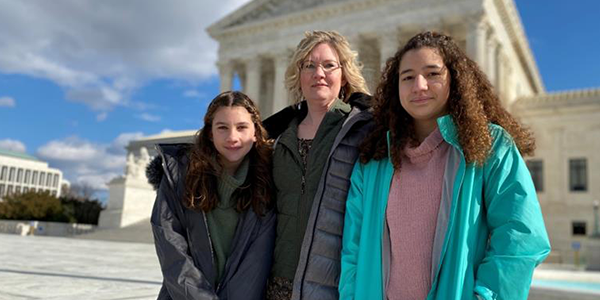
Kendra Espinoza, a hard working (three jobs) and determined single mom, decided to take her two daughters out of the local public schools and enroll them in Stillwater Christian School in Kalispell, Montana. She explained that she “wanted them to be able to read the Bible and be taught how to pray, and taught from that faith-based perspective.”… Continue Reading
Tags: Anti Christian Hate, Brett Kavanaugh, Christian school, Christian schools, Clarence Thomas, Constitution, Espinoza v. Montana, First Amendment, government mandated religion, John Roberts, Kendra Espinoza, Montana, Neil Gorsuch, religious liberty, Samuel Alito, School vouchers, SCOTUS, Stillwater Christian School, the Bible, Trinity Lutheran v. Comer, U.S. Supreme Court
Judicial Branch, Religious Liberty | Benjamin D. Smith | July 11, 2020 4:00 AM | Comments Off on An Important Win for Religious Liberty: Espinoza v. Montana
Written by Daniel Horowitz
King George couldn’t hold a candle to the judicial despotism we are governed by some 12 score and three years after the colonists rebelled against what they thought were “intolerable acts.” Sure, there was some taxation without representation going on in the 1770s, but I think the colonists would have taken that any day if they were to see in their crystal ball the severity of today’s social transformation without representation.
We celebrate so much more than the founding of a new nation on July 4.… Continue Reading
Tags: Benjamin Franklin, Continental Congress, Dana Sabraw, Declaration of Independence, despotism, Independence Day, James Madison, John Adams, King George, Robert Livingston, Roger Sherman, Thomas Jefferson, U.S. Supreme Court
Federal Issues, Judicial Branch | David E. Smith | July 8, 2019 4:30 AM | Comments Off on From the Redcoats to the Black Robes