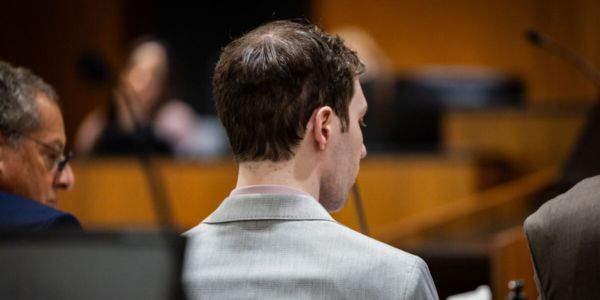
Judge Denies Tyler Robinson’s Plea to Remove Death Penalty
Written by Alyssa Sonnenburg
On Monday, July 6, 2026, preliminary hearings started taking place in regard to Charlie Kirk’s assassination case.
Tyler Robinson, the alleged assassin, and his defense team, requested that the death penalty be removed from consideration in his trial. The defense’s request was in response to prosecutor Christopher Ballard’s comment to the media about having “ample evidence” to prove Robinson’s guilt, in what the defense claimed was a violation of a gag order.
The judge held the prosecutor in contempt for discussing the strength of the case, deeming his remarks inappropriate.
Judge Tony Graf, in response to this request, commented:
“A prosecutor’s opinion of guilt is particularly likely to create prejudice, given that his or her words carry the authority of the government and are especially persuasive in the public’s eye,” Graf said.
“While transparency is a legitimate objective, prosecutors possess a heightened ethical duty to ensure that justice is done, which includes respecting the constitutional rights of the accused, like the presumption of innocence.”
But he rightly noted that the defense’s request was “disproportionate” to the gag violation and “legally prohibited” in the state of Utah.
This legal allowance in the state of Utah for the death penalty to be administered has once again raised questions surrounding the death penalty in general.
After all, the administration of the death penalty is one of the most controversial exercises of government authority in America.
Of our 50 states, 23, including the District of Columbia, have outlawed the death penalty.
Some argue that the death penalty is inhumane and further shedding of blood should be avoided.
The other side argues that the death penalty is the only true just decision in cases of premeditated murder and other heinous crimes.
The question is not: which side is right? The question always is: what does God’s Word say?
To find the answer, we have to go back to the beginning.
In Genesis 1:27, God declares that man is made in His image – bearing His likeness. We have emotion, intellect, and will – that which separates us from the animals as unique, intentional creations.
In Genesis 9:6, God’s defense of the death penalty is directly related to the image bearing status of His creation:
“Whoever sheds the blood of man, by man shall his blood be shed, for God made man in his own image.”
Throughout the law of Moses, instructions were given to the Israelites on how they should relate to one another:
“Whoever strikes a man so that he dies shall be put to death.” (Ex. 21:12)
“You shall not murder.” (Ex. 20:13)
“But if there is harm, then you shall pay life for life…” (Ex. 21:23)
“But if a man willfully attacks another to kill him by cunning, you shall take him from my altar, that he may die.” (Ex. 21:14)
“Whoever takes a human life shall surely be put to death.” (Lev. 24:17)
In the New Testament, the power of the sword is reiterated as being a basic function of government:
“… for he [governing authority] is God’s servant for your good. But if you do wrong, be afraid, for he does not bear the sword in vain. For he is the servant of God, an avenger who carries out God’s wrath on the wrongdoer.” (Rom. 13:4)
God’s Word is clear: human life is so precious that it is the duty of the government to exercise lethal punishment on those who intentionally take it.
Let us all pray for justice for Charlie Kirk – for Erika and her two children, for Charlie’s parents, for TPUSA, and for all those who loved Charlie.
And let us also pray for Tyler Robinson’s soul. No one is too far gone. Remember the Apostle Paul – a former persecutor of the Church and present at and approving of the stoning of Stephen.
“Last of all, as to one untimely born, he appeared also to me. For I am the least of the apostles, unworthy to be called an apostle, because I persecuted the church of God. But by the grace of God I am what I am, and his grace toward me was not in vain.” (1 Cor. 15:8-10a)

Tags: Charlie Kirk, Christopher Ballard, Tony Graf, Tyler Robinson
 Faith & Religion, Federal Issues | Alyssa Sonnenburg |
  July 11, 2026 5:00 AM