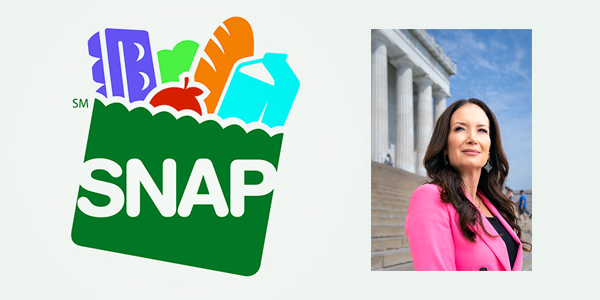
SNAP: Reforming a Broken System
Written by David E. Smith
For years, conservatives have warned that America’s welfare system—especially the Supplemental Nutrition Assistance Program (SNAP)—has been riddled with fraud, waste, and abuse. Now, at long last, someone in Washington D.C. is taking the problem seriously. Agriculture Secretary Brooke Rollins has announced a sweeping overhaul of the nation’s food stamps program, and the changes could not be more timely.
Roughly 43 million Americans—about 12 percent of the population—are enrolled in SNAP. Taxpayers spend $100 billion annually on the program. Every dollar wasted is a dollar taken from hardworking families and from the truly needy whom the safety net is supposed to protect.
Exposing Widespread Fraud
Rollins is requiring every SNAP recipient to reapply for benefits—a commonsense step that has caused predictable outrage among Democrats but is essential if we are to restore integrity to the system.
The data she already has is stunning:
-
186,000 deceased individuals were still receiving benefits.
-
500,000 people were getting more than double the allowable benefit.
-
Thousands were drawing benefits from three, four, even six different states.
And these numbers only reflect the 29 states—mostly red states—that complied with Rollins’ request for data. Illinois, like other deep blue states like New York and California have refused to cooperate, forcing the administration to sue for access. Rollins has made it clear: the fraud in those states is likely even worse.
Why wouldn’t state officials cooperate to make SNAP more efficient for truly needy families? Why would Democrats turn a blind eye to widespread waste and fraud? Why protect unqualified recipients—or even criminal abuse—over taxpayers who fund the program? Every fraudulent SNAP card drains resources from struggling families, single parents, and seniors on fixed incomes. Do they not care?
Welfare Fraud and Illegal Immigration
The Center for Immigration Studies (CIS) adds another deeply troubling layer to this picture. Although SNAP is legally restricted to those with lawful status, CIS estimates that 4.5 million illegal immigrants are using the program anyway. Even more alarming:
-
47% of all non-citizen households receive taxpayer-funded food assistance.
-
Roughly 60% of illegal immigrant households use at least one major welfare program.
Meanwhile, taxpayers—many of whom are struggling themselves—are told to simply “pay more” and trust the system.
Ending Taxpayer-Funded Junk Food
Rollins, working alongside HHS Secretary Robert F. Kennedy Jr., is also pushing states to place reasonable limits on what can be purchased with taxpayer dollars.
It turns out that nearly 25 percent of all SNAP spending goes to soda, candy, and other junk food. Soda alone is one of the most commonly purchased SNAP items. At a time when childhood obesity is skyrocketing, this is madness. Taxpayers should not be forced to subsidize sugar, snacks, and confectionaries. SNAP should support nutritional essentials, not fuel the health crisis.
Eleven states (ten red, plus Colorado) have requested waivers to prohibit junk food purchases—a simple reform that should have unanimous bipartisan support. Yet Democrats continue to resist any guardrails or accountability.
Restoring Work and Responsibility
The GOP-backed Big Beautiful Bill added two other key reforms:
-
Stricter work requirements for able-bodied adults without dependents—at least 80 hours per month of work, job training, or education.
-
State cost-sharing, requiring states to cover more of their administrative costs and pay a portion of overpayments when their error rates are high.
These changes reflect a basic principle: welfare should be temporary, targeted, and tied to responsibility. That’s not cruelty—it’s compassion guided by wisdom. Scripture reminds us that “if anyone is not willing to work, let him not eat” (2 Thess. 3:10). The goal is not punishment but restoration of dignity, purpose, and self-reliance.
Democrats Dig In
Unsurprisingly, federal Democrats like Hakeem Jeffries, Chuck Schumer, Elizabeth Warren, and Amy Klobuchar have denounced these reforms. They call any attempt to rein in fraud “cruel” and “punitive.” But ignoring abuse is what’s truly cruel—both to taxpayers and to the poor, who deserve a system based on integrity rather than exploitation.
Here in Illinois, Governor JB Pritzker and other state leaders have attacked the federal reforms in similarly emotional terms. Pritzker blasted the administration, claiming:
“The Trump Administration wants to let tens of millions of Americans go hungry… because President Trump wants to use food assistance as a political bargaining-chip.”
Lt. Governor—and now U.S. Senate candidate—Juliana Stratton echoed the same talking points, insisting that Republicans are “using SNAP as a political weapon” and warning that “hundreds of thousands of Illinoisans” are bracing for cuts. And Democratic Party of Illinois Chair Lisa Hernandez went even further, declaring:
“They’re refusing to save health care for 22 million Americans, and now they’re willing to let 1.9 million Illinoisans — including children — go hungry.”
Restoring Integrity to a Broken System
Secretary Rollins’ overhaul is long overdue. If implemented faithfully—and if fully adopted by all 50 states—it could dramatically reduce fraud, ensure that help goes to the truly needy, and save taxpayers billions. Why wouldn’t we want to do this?
At the end of the day, these reforms aren’t about partisanship—they’re about restoring basic competence to a bloated federal system. Yes, a safety net is necessary for those who are truly in need, but it is not the federal government’s responsibility to provide it. State and local governments are far closer to the people they serve, and they can partner with churches, ministries, and community organizations that actually know their neighbors and can respond with compassion and accountability.
Whatever the level of government, the expectation should be the same: crack down on fraud, enforce work and responsibility, and ensure that assistance reaches the truly needy—not freeloaders or abusers of the system. That is the bare minimum we should demand from anyone entrusted with the taxpayers’ money.
In the end, this is a matter of stewardship. Scripture reminds us that “it is required of stewards that they be found faithful” (1 Cor. 4:2). Taxpayer dollars belong to the people, and those who manage them have a moral duty to use them wisely, justly, and in a way that honors God and loves our neighbors.

Tags: Amy Klobuchar, Brooke Rollins, Chuck Schumer, Elizabeth Warren, Food Stamps, Hakeem Jeffries, JB Pritzker, Juliana Stratton, Lisa Hernandez, Robert F. Kennedy Jr, SNAP, USDA
 Federal Issues | David E. Smith |
  November 20, 2025 7:00 AM