Public Health and Private Idolatry: A Troubling Nomination
Written by Peter Heck
Casey Means‘ nomination to serve as U.S. Surgeon General is moving forward again.
That alone might not raise alarms. Presidents nominate allies all the time and political skirmishes over health policy are nothing new. But this nomination is different – not because of partisan alignment, dietary views, or vaccine debates. Because of spiritual foundations.
When I first began examining her public statements, I honestly assumed critics were exaggerating. They weren’t.
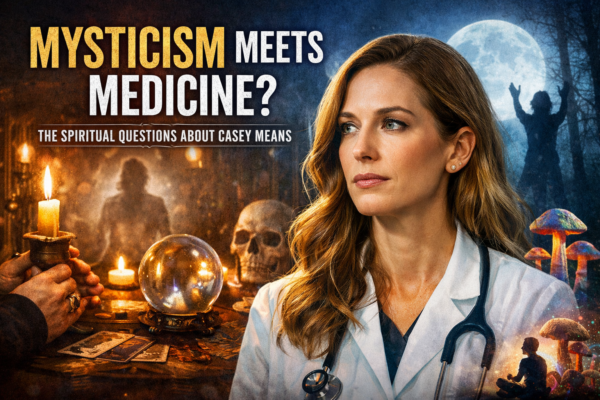
In her own newsletters and interviews, Means describes praying to photographs of her ancestors and asking them for support. She has written about consulting a spiritual medium to connect with “spirit guides.” She recounts performing full-moon ceremonies where participants “called in abundance.” She describes hiking alone and speaking out loud to trees, asking them for help in partnership.
She has written about plant-medicine experiences and credited psychedelic mushrooms with opening “a doorway to a different reality.” See for yourself:

These are not private journal entries dragged unwillingly into the light. They are public reflections offered as part of her spiritual and wellness philosophy.
Let’s be clear: this is not generic “harmony with nature.” This is animistic practice – the belief that spiritual power or guidance can be accessed through created things and unseen intermediaries.
For those unaware, the full testimony of Scripture is not vague about such matters.
- Leviticus 19:31 warns, “Do not turn to mediums or necromancers; do not seek them out.”
- Deuteronomy 18 condemns “divination, sorcery, and consultation with the dead.”
- Galatians 5 lists “sorcery among” the works of the flesh.
- Romans 1 describes the root error of paganism as “worshiping and serving created things” rather than the Creator.
In other words, opposition to Means’ advancement is not based off fringe theology. This is basic biblical orthodoxy.
At first glance, this may seem like a minor controversy. But the Surgeon General is not merely an administrative position. It is a symbolic one, representing moral and medical authority in a nation increasingly confused about both the body and the soul.
Christians believe the body is fearfully and wonderfully made. It’s one reason why we have so determinedly opposed radical gender ideology. We believe the body is the temple of the Holy Spirit, not an energetic vessel to be aligned through ritual, manifestation, or psychedelic spiritual exploration.
The issue is not whether Casey Means is intelligent or sincere. The issue is spiritual foundation.
And this is where the broader moment becomes uncomfortable.
Because given that many Christians speak frequently about America’s spiritual crisis – about cultural drift, moral confusion, loneliness, and the resurgence of pagan ideas dressed up as wellness – this moment requires consistency.
It is easy to critique gender ideology or progressive moral experimentation. It is harder to confront mysticism when it emerges within our own political coalition.
If we believe America is in a spiritual crisis, then elevating someone who has publicly sought mediums, spirit guides, and ritual communion with created forces is not spiritually neutral. It is spiritually significant.
The old gods have not vanished. They have simply rebranded.
What previous generations called witchcraft, our generation markets as integration, manifestation, or expanded consciousness. But the Bible does not change its language simply because culture changes its packaging.
Christians cannot lament national spiritual drift while dismissing overt mysticism when it is politically inconvenient to address.
James warns against double-mindedness. Paul calls believers not to be conformed to the patterns of this world. Faithfulness requires more than rhetorical outrage at cultural decay. It requires internal coherence.
Our nation does not need more mystics or mysticism, especially not cloaked in the language of public health. It needs moral clarity.
And that begins with remembering that communion with trees, ancestors, or spirit guides is not spiritual curiosity.
It is idolatry.
This article was originally published by NotTheBee.com.
Peter Heck is a writer, speaker, and teacher from Indiana. He is married to Jenny, and is the father of three kids. Peter holds to the infallibility and inerrancy of Scripture in his teaching and writing, and has a passion for biblical literacy and for demonstrating the Bible’s applicability to all of life.
Peter is the lead opinion writer for “Not the Bee.” His opinions have also been published in the Washington Times, Washington Post, USA Today, and on CNN, MSNBC, and Fox News. A former radio host, Peter produces a daily podcast and has authored a number of books on Christians and the culture.
Tags: Casey Means
 Federal Issues | David E. Smith |
  March 3, 2026 12:57 PM