The U.S. House Blocks Release of Sexual Misconduct Records
Written by David E. Smith
Congress Chooses Secrecy Over Transparency
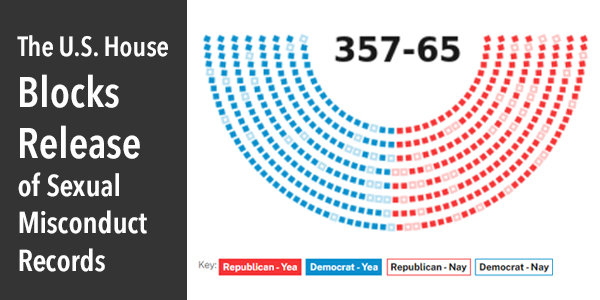
On March 4, 2026, the U.S. House of Representatives voted 357–65 to block a resolution that would have forced the public release of sexual misconduct and harassment reports involving members of Congress. The proposal, introduced by U.S. Representative Nancy Mace (R-SC), was instead referred back to the U.S. House Ethics Committee, effectively preventing the disclosures from becoming public.
Officials of the bipartisan Committee on Ethics, including U.S. Representatives Michael Guest (R-MS) and Mark DeSaulnier (D-CA), argued that releasing investigative records could retraumatize victims and discourage witnesses from cooperating in future cases. They maintained that confidentiality is necessary to protect participants in sensitive investigations.
Mace criticized the decision, accusing members of both parties of protecting colleagues rather than prioritizing transparency and accountability. She pointed in particular to allegations involving U.S. Representative Tony Gonzales (R-TX) as an example of why the public deserves greater disclosure about misconduct within Congress.
The vote to hide the truth about sexual misconduct is decidedly unpopular among Christian conservatives. Public demands for transparency do not have to come at the expense of protecting victims’ privacy. At stake is the integrity of our federal lawmakers.
Consider the following response from Thomas Hampson, a contributing writer for IFI who previously served as a U.S. Air Force intelligence analyst and as chief investigator for the Illinois Legislative Investigating Commission:
“On its face, the reasoning to vote against the Resolution is absurd. Personally, there is no good reason to keep even the names of victims secret, which this resolution still does. Secret justice is no justice. There’s one good thing from the vote. 357 members of Congress have outed themselves as untrustworthy.”
A Biblical Perspective on Sexual Sin and Justice
Sexual misconduct is not merely an ethical problem or a political embarrassment; it is a serious moral (sinful) offense. Scripture is clear that sexual immorality is disobedience to God and often destroys lives, marriages, and families. God’s design for sex is rooted in the covenant of marriage and demands faithfulness. When those in positions of authority abuse their power for sexual gratification, they violate not only the trust of the people they serve but also God’s moral law, and they often prey on subordinates.
The Bible also warns repeatedly against shielding wrongdoing. Ephesians 5:11 instructs believers to “have no fellowship with the unfruitful works of darkness, but rather expose them.” Justice requires truth. It requires accountability and should not be delayed (Deut. 16:20; Ecc. 8:11). Wrongdoing must not be concealed, but confronted.
Protecting victims is essential and right. But protecting perpetrators or concealing serious misconduct in the name of institutional reputation undermines justice and erodes public trust. Politicians who hide corruption cannot claim the moral high ground, and a culture that refuses to confront sexual sin will inevitably reap the consequences of that moral compromise—more sexual sin.

Tags: Mark DeSaulnier, Michael Guest, Nancy Mace, Thomas Hampson, Tony Gonzales
 Federal Issues | David E. Smith |
  March 7, 2026 4:00 AM