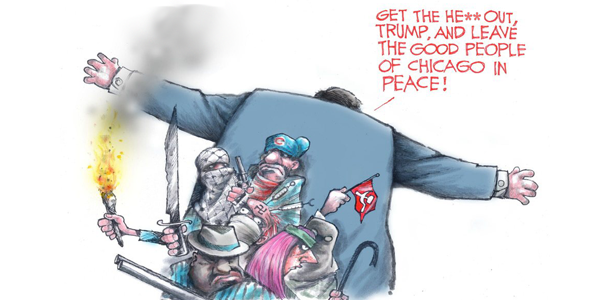
Chicago’s Unholy Alliance
Written by David E. Smith
Chicago is a city with a complicated legacy — a place that has inspired political machines, entrepreneurial innovation, faith-filled reform, and yes, devastating corruption. While many think of shady deals made in smoke-filled back rooms, the deeper and more troubling truth is that Chicago has a long history of collaboration between political figures and violent street gangs.
This is not conspiracy theory. It’s documented history.
Gangs as Political Machinery
Beginning in the 1960s, Chicago politicians recognized something that should have been obvious: gangs had numbers. Gangs had influence. And gangs controlled neighborhoods in ways that politicians never could. The result was a marriage of convenience:
• Politicians received muscle, manpower, and votes.
• Gangs received legitimacy, protection, and public funding.
One of the earliest examples was the Black P. Stone Nation, which emerged as the “Grass-roots Independent Voters of Illinois” — a clever rebrand meant to present the group as a civic organization. Under their charismatic leader, Jeff Fort, they obtained federal grants and even managed to secure an invitation to President Richard Nixon’s 1969 inauguration.
Their political success wasn’t rooted in community transformation — it was rooted in political deal-making.
Radicalization and Deepening Corruption
For those interested in the fuller, darker story, Ron Chepesiuk’s book The Darkest Sun: The True Story of the El Rukns, Chicago’s Most Violent Gang is a chilling exposé. He traces the transformation of the Black P. Stone Rangers into the El Rukns, a radicalized organization responsible for:
- Major drug trafficking
- Prostitution rings
- Contract killings
- Alleged terrorism plots with foreign actors
Throughout this transition, they continued to gain political favor and protection. And how did they do it? By cloaking themselves in religion and politics — forming a façade of community uplift while their empire expanded in blood and destruction.
Fort eventually went to prison for misusing federal funds and later for conspiring with foreign governments. But the model he pioneered — using political and religious institutions as cover for criminal advancement — lived on.
Some assume that because today’s gangs don’t publicly endorse candidates or show up at political events en masse, the dangerous relationship has ended.
But the alliance has simply evolved.
Modern gangs still influence elections — through voter harvesting and intimidation. In many neighborhoods, gangs control housing, local economies, and daily movement. As one expert bluntly put it:
“Most gang members can’t vote themselves, so this is their way of influencing the vote.”
Instead of overt partnerships, we now witness a more institutionalized, quiet, and strategic form of power — one that rewards politicians who look the other way while communities suffer under crime and addiction.
And now, under Sanctuary City policies — particularly in Chicago — the opportunity for cartel influence has exploded.
Sanctuary Policies: Who Are They Protecting?
Chicago proudly advertises itself as a Sanctuary City — refusing to cooperate with federal immigration enforcement. That means:
- Criminal cartels can operate with less fear of being handed over to ICE
- Illegal gang members arrested for violent crimes are routinely released back into communities
- Drug networks tied to Mexico and Central America can expand their territory
- Human trafficking rings flourish under political protection
Instead of protecting the vulnerable, these policies protect the predators.
And once again — just like in the El Rukn era — political figures reap benefits from keeping these networks alive and loyal.
The Questions We Must Ask
Chicago’s streets are flooded with cartel-supplied fentanyl and outlawed weapons. Human trafficking rings flourish in plain sight. Violent crime remains staggeringly high despite billions poured into “community programs.”
Why isn’t anyone in the media or in law enforcement asking:
- Who benefits from letting gangs and cartels thrive?
- Who makes sure the money keeps flowing and the bodies keep silent?
- Which politicians are quietly protected by the very criminals destroying our neighborhoods?
- Which politicians are getting financial kickbacks?
Is it really so hard to believe — given the documented history — that some of today’s most powerful political figures may have dangerous allies?
A Call to Truth and Reform
Chicago does not need more empty speeches about “social justice.” What Chicago desperately needs is:
- Full investigation into gang involvement in voter operations
- Leadership willing to confront — not coddle — organized crime
- A return to biblical justice that protects the innocent and punishes evildoers
The prophet Micah declares:
Woe to those who scheme iniquity,
Who work out evil on their beds!
When morning comes, they do it,
For it is in the power of their hands.
~Micah 2:1
If we continue to tolerate political corruption through gang empowerment, we will reap what we have sown — in violence, addiction, broken families, and shattered futures.
Chicago deserves authorities who fear God, not gangs. Authorities who protect our children, not their own power. Government officials who understand that righteousness — not criminal alliances — exalts a nation..
It’s time to break this unholy alliance once and for all.

Tags: Black P. Stone Rangers, El Rukns, Jeff Fort, Ron Chepesiuk, sanctuary city, The Darkest Sun: The True Story of the El Rukns
 Crime Culture, Illinois Politics | David E. Smith |
  November 1, 2025 5:00 AM